Category Archives: entertainment

on movies and the merchant princes of Parksley

Art: Everybody knew everybody.  I carried papers, and that helped me, too.  I knew everybody.  I mean, you may not have known all the old people, but you knew all the children and most of the adults. 

… Growing up, of course movies was the thing.  We did not have TV.  TV came along in 1951 when I was 16 years old.  Prior to that, radio.  We had only one radio – a Philco.  And family was really together. 

I listened when I came home from school – to Captain Midnight, and I had a Captain Midnight badge. … I listened to the Captain Midnight and Jack Armstrong.  They had the soap operas, but they were not something the schoolchildren were interested in.  The soap operas were generally over by the time we got home at 4 p.m. or so. 
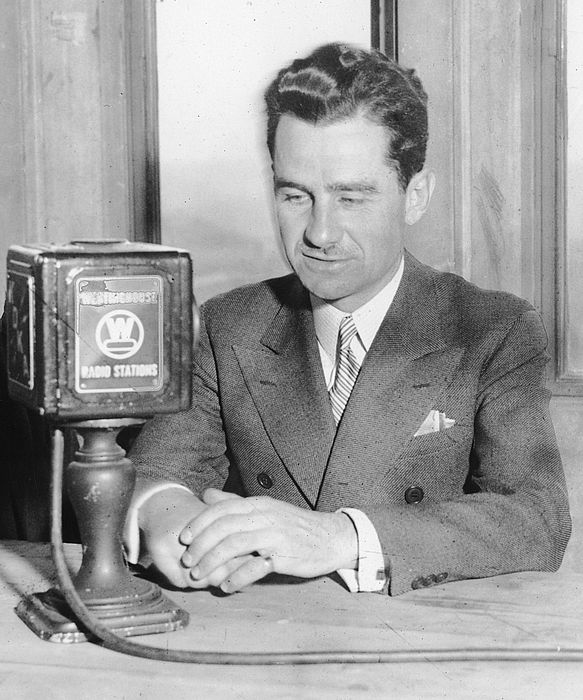
And then for the next two hours or so, everybody listened to the news together.  Lowell Thomas and Gabriel Heatter, Edward R. Murrow later.  Lowell Thomas was a big one.  We trusted him.  And he was a great traveler, you know, Himalayas and – he’s the one who really discovered Lawrence of Arabia.  [Thomas] was a young newsman, and he heard about this romantic figure in the desert.  And he filmed a lot of that and then they had – long before my time – private showings, you know.  He made money and also made Lawrence famous.  They fell out near the end of the relationship. 

But movies was the big thing.  We went to the Royal.  Now, you could go to Onancock.  You could go to Pocomoke.  Pocomoke was the ultimate.  I mean, we seldom went to Salisbury.  That was beyond the limits.  But Pocomoke had a movie theater called the Marva.  … I spent a lot of time, as did your dad, in Cape Charles in the summer, because we had relatives there.  And they had two theaters there: the Radium and the Palace.  And the Palace is still there.

There were more.  There were others.  There was a black theater here, which the building still stands in Whitesville, and I can’t think what that was called.  But we went to the Royal.  The Royal was built as a theater.  Some of these others – like the one they just tore down in Painter was a reconditioned house, a storage building or something.  It’s just been torn down, why I don’t know.  But the Royal was built in the late ’30s.  Remember Hee Haw?  Grandpa Jones of Hee Haw … I don’t remember seeing him – but he was here.  That was – it was like a vaudeville kind of thing.  And I do remember one of them – Lash LeRue, and he sang was a whip.  That’s the way he’d get the wrongdoers, you know.  He’d throw that whip and trip them up and they’d fall down, you know.  And he did rope tricks and all, and when he was doing it, a spotlight next to the curtain got on fire.  And that could have caused panic.  He was very calm.  Lash LeRue, I remember, I was there.  He said, “I’ll care of that.”  And he went over and stamped out the flames, and maybe somebody came down from the fire station.  I’m not sure, but he maintained calm while he performed, so he was kind of a hero.  About once every two or three months, they’d have a state show.  …

Lee: Was it a room with folding chairs or an actual auditorium with a stage?  

Art: … An actual auditorium – it was built to be a theater.  It was – you’ve been to the Roseland in Onancock.  Well, yeah, it was like the Roseland in layout.  It did have balconies, though.  It had two – over the restrooms were little – I never went up there – were balconies.  And the owners would sit there and somebody he had invited to see a movie.  You know, kind of like a private screening.  Sit up there.  John Herbert Hopkins.  It was a Hopkins enterprise.  Hopkins owned Parksley.  Hopkins owned Parksley almost lock, stock and barrel. 

The Hopkins, old man John H. – my father worked for him, ran the hardware store.  So, that’s how I knew all about the Hopkins.  Old man John H. was probably a grandson of the Hopkins Brothers Store in Onancock.  The Hopkins were always merchants.  … And he was an enterprising merchant – John H. was – I remember as a very little boy, he gave me some chewing gum.  I remember that.  I was in the store waiting for my father to close up.  By the way, retail establishments – those people worked very hard.  On a Saturday morning, you’d get in at 7:00 or 7:30, and you wouldn’t leave there until shortly before midnight.  Midnight, because of blue laws, they would have stayed open longer, but the law wouldn’t let them do it.  Those people worked from early in the morning – now, you had lunch break, but – til nearly – that was Saturday nights.  Generally weekdays nights, I guess my father would get home 7:00 or something like that and have dinner. 

But anyhow – John, how he made his money, aside from inheriting it, was he was county treasurer.  And at that time, you got a commission for what you collected, and he apparently was relentless in pursuing county debtors.  And you know, if you don’t come up with that money, I’m going to shoot that hog and take the hog away – that was the stories they told.  He lived to 103 when the railroad came through, which was the reason Parksley was created.  He came here to live.  …

He had two sons and he lived to be quite an old man, but the sons died in their ’50s – both of them, it was rather tragic.  And then the Hopkins possessions, which were a hardware store, lumber yard, electric company until the REA came, water works, which they donated at the time – they had the first water works before it became a municipal project, when the WPA and PWA put money in the ’30s.  I can’t think – furniture store – I can’t think of all the things they had, but they were the merchant princes of Parksley. 

John Herbert was not much interested in that kind of thing, but they had movies for years over the hardware store.  You went up the steps and saw the movies.  And he persuaded the old man, his grandfather – his father was dead then – he persuaded the old man to give him land.  He wanted to put up a movie theater.  And it was a fairly narrow aisles, and they always said the old man wouldn’t give him the couple, three more feet that he wanted.  You know, “you don’t need – let the SOBs get in there the best way they can.  You know, we’re not gonna have a boulevard through here.”  And ran it, and he did well with it until TV.  TV put him out of business.

from an interview with Art Fisher, spring 2013

Leave a comment

Filed under Uncategorized

“the show is coming!”

They used to have tent shows – did anybody tell you about them, the shows that would come to the Eastern Shore?  … They’d come with movies and actors on the stage and that sort of thing and set up the tents, and they would come at strawberry-picking time, because that was the first time in the year that people in the neighborhood had a little cash. The pickers had made some money, and it cost ten cents to get in.

One of them was O.L. Sykes – the name on the truck.  The other one was Al Moore.  I don’t know where they came from or how far they went, but you’d hear they were down the county.  The show is coming!  So you knew pretty soon they’d be up in Birdsnest.

Some of the movies … were silent still, and they’d put the words on the screen.  Both black and white came.  The black folks sat on the right-hand side and the white folks on the left-hand side.  But all under the tent together, and while they were under the tent, both sides  – when the words came onto the screen, you didn’t have to know how to read when you were real little, because those who could read would whisper to their neighbor what the words were saying, and you could hear in unison maybe 40 voices whispering what the words were up on the screen.

And almost all of them were old western shows that they had.  I don’t remember any of the actors but it was a marvelous thing to go to those tent shows.  They’d take them down on Sunday and move up the road a ways farther and set it up again.

They’d sell Cracker Jacks after the movie was over, turn on the lights, and then some would get up on the stage and act and dance and tell the corniest jokes and encourage people in the audience to come up and do tap dancing or any old fool thing, but it was a wonderful show.  Those places were packed every night.

From an interview with Ridgway Dunton, summer 2010.

Leave a comment

Filed under entertainment

“everything we did was outdoors …”

I played every sport in high school. I didn’t have to work out, because I was in shape.  Like they do now?  We didn’t work out.  I was hard as nails, ’cause … we worked all the time.

I played baseball.  I played football.  I played basketball.  I did a little boxing.  … I played all the sports, but we worked that in.  I’d play baseball and then walk home from school.  There ain’t no way to get home; we walked home.  Ain’t no bus to take us nowhere.

When we played football, we didn’t have no money to buy uniforms.  The school didn’t buy no uniforms. We had, I think it was five helmets and we didn’t have no shoulderpads.  We used sweatshirts.  We put on about three or four sweatshirts.  They knew – ’cause the backfield had helmets and one or two on the line – they knew what plays we were going to make because we’d have to switch our helmets around. And the football field at the end of the game – it looked like a rag field, because they’d grab you  and you’d lose your sweatshirts.

We did have baseball suits though.  I don’t think we bought our uniforms.  …  But basketball we played – we didn’t have no gyms … we played on the dirt.  We played outside.  That’s why we played in the spring of the year.  I mean, it was dirt courts.  We played tennis too.  Tennis … [the school] didn’t have no sport of tennis; [but] you could play tennis.  I used to like to play tennis.

I don’t know why they didn’t build any gyms, but we played outdoors and everything we did was outdoors, so I guess they thought that’s where we were supposed to [play].

From an interview with Bev Fletcher, spring 2010.

Leave a comment

Filed under entertainment

on horses and mules

Everett: [We had] horses mostly.

Franklin: Mostly horses. They were cheaper to buy.

Everett: Work ’em six days a week and then we’d ride ’em on Sundays.

Franklin: That was a pleasure. We’d go to church Sunday afternoon and we’d ride the horses that morning, that was going out to Beaverdam Church, and build fires in the wood stove. That was a pleasure.

Audrey: What was the name of that horse? He used to come see me on a horse.  That was before we were married.  I’d hear this horse going bump, bump, bump … and I’d look down and here he’d come on that horse.  It was white with grey.

Franklin: We called it the grey horse.  It was mean as a dog.

Audrey: I lived how far from you?

Franklin: Twelve.  Twelve miles, I guess.  … I’d go through the woods and that kind of stuff. Probably eight miles, something like that.

Lee: And horses were cheaper to buy?

Franklin: Horses were cheaper than mules.

Lee: Why?

Franklin: I often wondered why myself, but a good pair of mules were worth twice as much as a pair of horses.  One thing, horses were more plentiful.

Everett: Mules were dumber, I think.  They go on and do their work, where a horse is getting around it somehow or another.  I remember when I was a child, the old horse there cultivating the corn – and he’d get to the end and see he learned that it was hard to hold the handle, the collar, and he’d put his foot over the chain.  You had to go down there and unhook the chain and put it around.  He’d get time – he’d kill time and he’d get to rest up.

Franklin: That’s the only rest they got, when they made a turn.  Each end of the field, they’d slow right down and make a job of the turn. That’s when they got to rest up.

from an interview with brothers Everett and Franklin Holland & with Franklin’s wife Audrey, fall 2009.

Leave a comment

Filed under animals, economy, entertainment, technology, transportation

when a hundred dollars cash money at Christmas would last until Spring

Richard: I heard my father say when he was a boy – he was born in 1900 – when he was a boy, his daddy said if he had a hundred dollars cash money at Christmastime, he was alright until Spring – on a hundred dollars. Isn’t that crazy? Only thing they had to buy was kerosene …

Nora Lee: … flour, sugar …

Richard: …flour, sugar, and doctor bill once in a while, which was probably $5. I mean, when you’ve lived as long as we have … it’s just mind-boggling to see how far $100 goes now. I mean it’s weekly [now] …

We lived on a farm. We got our mail from Pastoria. … Dad let us go to the store most nights. The men always talked around the old country stove, and I’m talking during the ’30’s now, during the Depression, and us boys played Dead Mule and Lost Track and Hide and Seek and all the other games boys and girls play. So, it was a good life.

We didn’t have any money. Nobody had money.

Nora Lee: Nobody, so everybody was poor.

Richard: The store was two miles through the woods. I made many a trip out there with a dozen or two dozen eggs or a piece of fat meat to get mamma’s groceries, and if it was 15 cents leftover, you got what you’d call a due bill. The store master, the storekeeper, gave you this little piece of paper that – owed you 15 cents for a side of meat or a dozen eggs.

That was the hub, yeah. That’s how you – well, you bought everything you needed. You bartered for most of it with eggs or a side of fat meat.

On Saturday night [when we went into Parksley] … we got a quarter. Fifteen cents for the movie. And ten cents for an ice cream cone. Ice cream cone was about a nickel or a Coke or whatever, but it was ten cents to throw away. That was what we got. We got 25 cents Saturday night.

Nora Lee: That was the highlight of your week.

Richard: For working all week. And my job at home … As soon as the boys got big enough to do anything, the boys took over. My brother milked the cow. I never did have to milk the cow, but my job was tend to the woodpile. Keep the wood split and fill the woodbox up when I came home from school. So, that’s kind of quaint, isn’t it?

Of course, you’re talking about ten cents for a gallon of kerosene or fifteen cents or something like that. I don’t know how much a pack of cigarettes was then, but everybody smoked – well, most people rolled their own.

Nora Lee: Cheaper.

Richard: Gosh, a bag of Bull Durham was five or ten cents, and that was a right good size – would make a lot of cigarettes. … It has a string on it that you pulled the string and that tightened it up. When you pulled it open, you could dump it out in your cigarette. And some people, boy you talk about – they could roll a cigarette …

We entertained ourselves if Daddy let us have [time off]. Saturday afternoon most of the time was ours, and we boys – we played in the creek and swam and, like boys will do, did all kinds of throwing mud and mud baths and such as that. There really wasn’t anything real exciting that went on ’til Saturday night when we went to Parksley.

from an interview with Richard and Nora Lee Parks, summer 2009

Leave a comment

Filed under economy, entertainment, food

… and that’s the way she taught us.

Rhoda Dalby Young, 1935 (courtesy of the Dalby/Young family)

They had a two-room schoolhouse [in Westover, Maryland]. In fact, it had been a big two-room – a double one – but we had our school in one of [them]. The other was used for library books and special supplies. Miss Mary Wetsel – she was a Catholic – and she taught five grades.

I [started] the second grade [in Lower Northampton County] and had Ms. Hurt. … and that’s where I had my first little boyfriend. Billy … he gave me a little cage with a key on it that had a little bird in it, and you’d turn that and the little bird would sing. … But in the second grade Billy called Ms. Hurt one day, and he had a bracelet and it had “Rhoda Dalby” on it. His mother had bought it for him. He was asking her to fasten it for him, and she was all smiles there doing that. But anyway, he asked me if I wanted to wear it, and I said, “No, I don’t want to wear it.”

But anyway, going back to the one-room schoolhouse, there would be, as you go in the front, we had a bucket of water on the table in the back with a cup, and we had two little johns outside. That way was the boys, and that way was the girls, and I was in the second grade, so I was not in the first aisle as you came in.  That was the first grade.  The second was the second grade. And the last – there were not that many in the second grade, so the row was finished out with the third graders. 

And then there was a big pot-belly stove filled with coal, and they had a zinc thing around it to keep it from – the children from falling against it.  So, the other side, you went to the fourth on the far wall and then the fifth against that stove. 

She was fabulous. She was an old maid – Miss Mary – but she was sweet to us. There was a big blackboard in the back of the room and a long, like a church bench in front of it, so she would take grade one and maybe with grade one, she’d have a thing up there with birds. “How many birds? Did you see a Robin?” “One” or whatever, and that’s the way she taught us.  

And then, of course, we would progress and we three little girls would go to visit her in the summertime.  I remember, one year, she went across the country, and so we went and visited with her and sat and listened to her story about going across the country.  We were like that.  

…  Mother sewed, so we had little dresses, not many, but she made everything we wore.  We would go and visit up and down in Westover … everybody [would say] “those little Dalby girls” but we enjoyed life there.

from an interview with Rhoda Dalby Young, summer 2009

Leave a comment

Filed under clothing, education, entertainment